Speaking Without Fear
Quick Navigation
Hardly anyone walks onto a stage feeling at home there. The ease you read in a confident speaker was built, not handed down at birth, and that single fact is the most useful thing to carry into any preparation. Speaking is a craft. It answers to rehearsal the way a golf swing or a second language does, so the skill is available to anyone willing to put in the work.
So where does the fear come from? Mostly from a worry about being judged in real time, with no edit button. Surveys keep placing public speaking among the fears people name most often, and the old line that audiences dread it "more than death" has been repeated for decades because it is memorable, not because any agency certified it. Whatever the ranking, the point holds: the nerves are normal, not a verdict on your competence — a skill problem with a known solution.
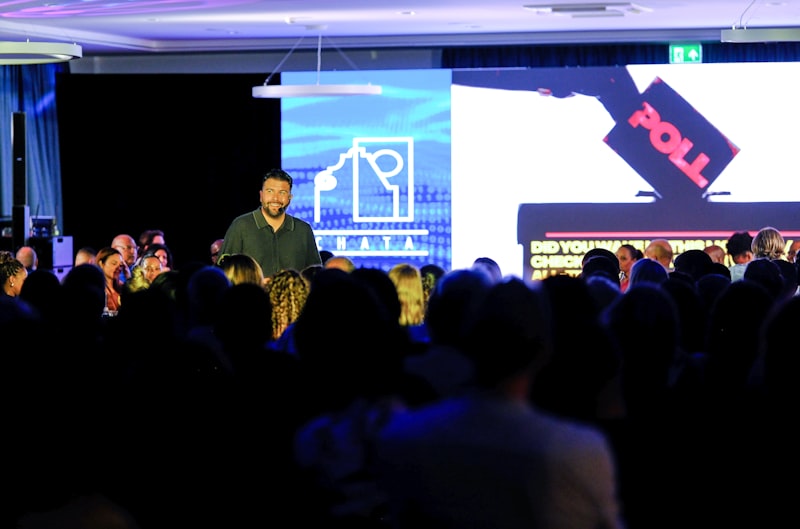
This guide treats public speaking as a small set of separable problems. What you build into the talk. How you handle the nerves. How you deliver once you are up there. Each is learnable on its own, and you do not have to fix them all at once. For the habits underneath all of it, our material on persuasive communication and the longer presentation skills guide go further; if English is the part you are working on, improving English communication skills pairs naturally with the practice habit below.
Building Ethos, Pathos, and Logos Into the Talk
A talk that lands has substance before it has polish. Nothing rescues a presentation with nothing to say, and no amount of vocal warm-up fills an empty argument. The cleanest tool for auditing your content is older than every speaking book on the shelf.
Aristotle, in the Rhetoric, laid out three appeals a persuasive speaker draws on. Ethos is your credibility — the audience's reason to believe you are worth listening to. Pathos is the emotional stake that makes them care rather than merely follow. Logos is the reasoning and evidence that holds the claim up under pressure. Most weak talks are top-heavy on one and starved of the rest. The engineer's update runs on pure logos, so the room nods and forgets why any of it mattered. The pep talk runs on pure pathos, so people leave moved and unable to act the next morning. Check all three against your draft before you open slide software.
Ethos you build less by claiming authority than by earning it: knowing your material cold, citing real sources, admitting what you do not know. An audience can smell a bluff. Pathos is not a sad story bolted on; it is making the stakes concrete enough that the listener feels why the topic is not abstract to them. Logos is where most preparation time should go — clear reasoning, evidence that survives a skeptical question, a structure someone could repeat back. When the three pull together, a modest topic carries; when they fight, a strong one falls flat.
If time is short, get content and structure right before you touch delivery; polish on a hollow talk is paint on rotten wood. Once the substance is sound, delivery is what turns an adequate talk into one people quote afterward, and that earns real rehearsal.
Managing Nerves: Reframe, Do Not Suppress
Almost everyone gets nervous, and the instinct is to fight the feeling down. Bad instinct. Forcing yourself calm tends to make it worse, because now you are managing the talk and the war against your own pulse at once. The better move starts with what the nerves actually are.
A racing heart, a dry mouth, a flood of adrenaline — that is arousal, and arousal does not come pre-labeled. The body produces the same response whether you tell yourself "I am terrified" or "I am fired up for this." The physiology is identical; the story you put on it changes how it feels and how you perform. Reframing the surge as excitement rather than dread is a more accurate reading of a body gearing up for something that matters to you.
Preparation is the other half, and the larger half. The biggest driver of pre-talk panic is the fear of going blank, of standing there with nothing coming out. The antidote is unglamorous: know your opening cold. Rehearse the first two minutes until they run on rails, requiring no recall. Once you are moving, momentum usually takes over and the blank-mind fear loses its grip. People who look unshakeable on stage are mostly people who removed the thing that scares them most, in advance, alone.
A few mechanical habits earn their place. Slow, deliberate breathing before you begin steadies the voice, since shallow breathing is what makes a nervous voice shake. Arriving early to stand in the actual room strips out the small surprises that spike anxiety in the first minute. Turning your attention outward, onto whether the audience is following rather than onto how you come across, quiets the self-monitoring that feeds the loop. The nerves rarely vanish. They become workable, and with repetition they shrink, which is the entire promise an organization like Toastmasters is built around. One caution: if the anxiety is severe enough to interfere with your work or daily life, raise it with a qualified professional rather than pushing through alone.
Presentation Types Compared: Choosing the Right Format
Not every speaking situation asks for the same thing. The advice that fits a wedding toast will sink a board update, and a TED-style keynote built for a status meeting reads as theater nobody asked for. Match the format to the room before you draft, because the choice quietly shapes everything after — length, slides, tone, how much you memorize.
Purpose is the split that matters most. Are you informing, persuading, or motivating? An informative briefing rewards clarity and structure; people came for the substance, so give it in an order they can follow. A persuasive talk leans harder on logos and ethos, since you are asking the room to change a position and the reasoning and your credibility carry the weight. A motivational talk lives in pathos and can afford a looser structure, because the goal is felt energy rather than transferred facts. The table sketches the practical differences.
| Format | Main goal | Where the weight sits | What to prioritize |
|---|---|---|---|
| Informative briefing | Transfer understanding | Logos, structure | One clear message, an order people can follow, no clutter |
| Persuasive pitch | Change a position or decision | Logos and ethos | Tight reasoning, real evidence, your own credibility |
| Motivational talk | Move people to act or feel | Pathos | A concrete stake, vivid examples, energy over density |
| Ceremonial / occasion | Mark a moment | Pathos, brevity | Short, personal, warm; resist the urge to run long |
| Q&A or panel | Respond on your feet | Ethos, listening | Brief answers, honesty about gaps, no filibustering |
Audience size changes the calculus too. A handful of people around a table want something close to conversation, with eye contact and room for interruption; a few hundred in an auditorium need bigger structural signposts and more deliberate delivery, because the intimacy that carries a small group does not reach the back row. The channel matters as well: a talk through a webcam is its own animal, covered in our guide to remote communication skills, because the camera strips out signals you lean on in a room. No single style is "correct." The skill is diagnosing which one the moment calls for, then committing instead of splitting the difference.
A Seven-Step Preparation Routine
Preparation is where talks are won, and it is the part nobody sees, which is exactly why it gets cut first under deadline pressure. The work that makes a speaker look effortless happened days earlier, in private. No shortcut survives a live room. What follows is a routine, not a ritual — adapt it, but skip steps at your own risk.
One: name the single message. If a colleague who missed the talk asked what you said, what is the one sentence you would want repeated? Write it down. Everything in the talk either serves that sentence or gets cut. This sounds easy and is brutally hard, because every fact you know feels load-bearing. Most are not.
Two: know the audience. What do they already believe, what do they want, what will they push back on? A talk pitched at the wrong level fails no matter how polished it is, and five minutes picturing the actual people in the seats saves an hour of misdirected drafting.
Three: build the spine before the slides. A reliable structure runs in three movements: frame the problem so people lean in, develop a small number of key points with their evidence, then close on a specific call to action. Decide that architecture on paper first. Slide software invites you to decorate before you have decided what you are saying, which is backwards.
Four: keep it to a few points. Three is a reliable target. An audience listening in real time cannot rewind the way a reader can, so three signposted points get retained while seven blur into a wall of slides no one can reconstruct. Seven things to say means two talks, or one with a long appendix that belongs in a follow-up document.
Five: rehearse out loud, on your feet. Silent review at your desk is not rehearsal. It skips the parts that break — the transition you fumble, the sentence that only sounds clumsy when spoken, the spot where you run long. Stand up, use the real slides and clicker, and time yourself. Almost everyone overruns, and cutting under pressure in the room is the worst place to do it.
Six: lock the opening and closing. Know those two stretches nearly word for word while the middle stays flexible. They carry disproportionate weight and attract the worst of the nerves, so having them automatic frees your attention for everything between. Hold the body of the talk by structure, not by script — confident enough in the path to talk to the room rather than recite at it.
Seven: prepare the hard questions and the logistics. List the three questions you most hope nobody asks, and have an honest answer for each; the toughest objections are predictable if you are candid about your argument's soft spots. Then check the room or the link, test the slides on the machine you will actually use, and confirm the clicker the day before — not the morning of. The unflappable speakers are largely the ones who removed the surprises ahead of time.
Delivery Habits That Separate Good From Memorable
Once the substance is solid and the nerves are workable, delivery is where the real distance opens between a competent speaker and one a room remembers. The encouraging part: delivery is mostly concrete behavior, not a personality you are stuck with. Habits, and habits can be drilled.
Start with the voice, which does more work than any other single tool. Pace is the big lever. Nervous speakers rush, and rushing reads as anxious and hard to follow at once, so slowing down — even past the point that feels natural — almost always improves how you come across, because the audience needs processing time you cannot feel from inside your own head. Pauses are the punctuation of speech. A deliberate two-second silence before a key line lands it harder than volume. Most people fear that silence and stuff it with "um." Let it sit. It works.
Variation keeps a voice off the monotone that empties a room faster than anything else. You do not need theatrical range, only enough difference that the important sentences sound unlike the connective tissue between them. Eye contact is the relationship — hold a gaze with one person for a few seconds, finish the thought, move on, and skip the robotic scan over the tops of heads that fools no one. The body either backs the voice or competes with it: open, purposeful gesture adds energy, while a death grip on the lectern leaks the nerves you are trying to hide.
This is also where the Mehrabian numbers get dragged in and abused, so be precise. His 1967 studies found that when a speaker's words and their tone or expression conflict on a matter of feeling or attitude, listeners tend to trust the face and voice over the words. That is a narrow result about mixed signals in a lab. It was never a finding that 93% of a talk is body language and only 7% is content — Mehrabian himself spent years correcting that misreading. Delivery reinforces your message or undercuts it; it does not replace having something to say. For more, our material on body language and nonverbal communication goes deeper, and the broader skill set sits in our communication practice plan.
One last technique separates the memorable: a real story or a sharp concrete example, placed where the argument needs warmth. Abstract claims slide off; a specific scene sticks. This is pathos the way Aristotle meant it, and it is the cheapest upgrade available to most speakers, who default to general statements when a single vivid instance would have done the persuading for them. Presence — that sense a speaker is with the room rather than performing at it — grows from the same combination: material known cold, and visible care about whether the audience gets it. You cannot fake the second for long, and the surest route to both is the dull one, preparation deep enough that the mechanics run themselves.
Frequently Asked Questions
How do I get over the fear of public speaking?
You mostly do not get over it. You make it workable, which is the better target anyway, since even seasoned speakers feel the surge before a big room. Two things move the needle. Rehearse your opening until it runs on its own, because the fear of going blank spikes the worst of the panic and a locked first two minutes removes it. Then aim your attention outward, onto whether the room is following rather than onto how you look. The adrenaline is just energy; read it as excitement and point it at the talk. It shrinks with repetition.
How many times should I rehearse a talk?
Enough that your opening and closing are automatic and you have run the whole thing out loud, on your feet, more than once. There is no magic count. A short, low-stakes update might need a couple of full passes; something that matters wants enough repetitions that you stop fumbling the transitions and the timing settles. Quality beats quantity: one honest run standing up with the real slides teaches you more than five silent read-throughs at your desk, which skip the parts that break in the room.
What is the best way to open?
Earn the attention rather than assume it. The first thirty seconds decide whether the room is with you or politely waiting, so skip the throat-clearing apology ("sorry, I didn't have much time to prepare") that hands away the most valuable slot in the talk. A blunt statement of why this matters to the people in the seats works. So does a surprising fact, a short scenario, or a sharp question. Whatever you pick, know it nearly word for word, since the opening is where nerves hit hardest and a memorized start carries you past them.
How long should a presentation be?
As long as it needs and not a minute more, which usually means shorter than your first draft. Audiences fade, and a tight talk that ends early is remembered more fondly than a thorough one that overran. Match length to format: a toast stays brief, a briefing runs as long as the substance requires, a conference slot is whatever the organizers gave you minus a margin for questions. The discipline lives in rehearsal. Time yourself, find that you are over, and cut there, where you choose what goes, instead of improvising cuts live while the clock glares at you.
Should I memorize the whole thing word for word?
No. A fully memorized talk sounds recited, and it collapses the instant you lose your place, because there is no structure underneath to catch you. Reading a full script is no better: it breaks eye contact and drains any sense that you are talking with the room rather than at it. Aim for the middle. Memorize the opening and closing, since those carry the most weight and draw the most nerves, and hold the body by its structure instead of its exact wording. Brief notes — key points and transitions, not full sentences — make a fine safety net.
What body language should I avoid?
The habits that leak nerves and pull attention off your point. Gripping the lectern, rocking from foot to foot, fidgeting with a clicker, hiding behind a laptop, scanning robotically over heads instead of meeting anyone's eyes — each one quietly tells the room you would rather be elsewhere. Reading off your slides is the costliest, because it breaks eye contact and signals you do not know your own material. None of this needs choreography to fix. It needs you to notice what your hands and feet do when you are anxious, then swap the nervous tic for stillness or a gesture that means something.
What do I do when someone asks a question I cannot answer?
Say you do not know, then say what you will do about it. "I don't have that figure in front of me, but I'll track it down and follow up by Thursday" reads as honest and competent at once. Bluffing reads as the opposite, and a sharp questioner usually catches it, which costs more credibility than the gap ever would. You can also hand it to the room ("does anyone here have data on that?") or narrow the question to the part you genuinely can address. Listing your three hardest questions during preparation means fewer of them catch you cold.
How do I make my voice less flat?
Build in variation on purpose, because monotone is the fastest way to lose a room and the easiest thing to fix once you hear it. Vary your pace: speed up slightly through the connective tissue, slow down hard on the lines that matter. Use pauses as punctuation — a two-second silence before a key point gives it weight no volume can. Let your pitch move enough that the important sentences sound different from the rest; aim for contrast, not theater. Recording yourself once is uncomfortable and unusually useful, since flatness you cannot hear from the inside is obvious on playback.
CommunicationAbility is reader-supported and independent; we accept no sponsorship or paid placement, and this guide is general professional-development information, not a substitute for professional, counseling, or mental-health advice. Terms apply.
Authoritative sources & references
Last reviewed: June 25, 2026